
What Should You Know Before Installing a New Commercial HVAC System?
Learn what to consider before installing a new commercial HVAC system, including sizing, energy efficiency, installation costs, building needs, and long-term maintenance.

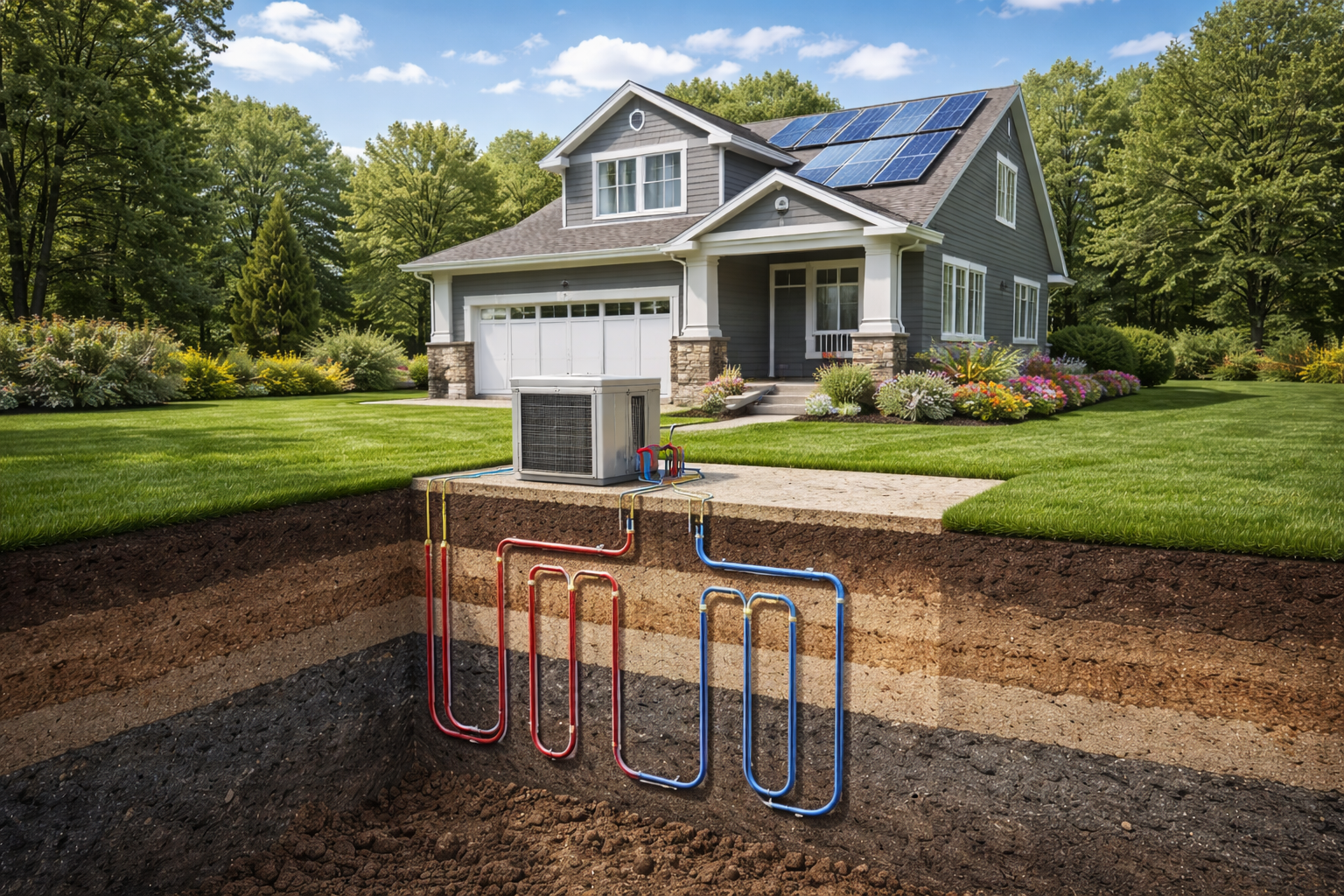
Geothermal heating and cooling, also called ground-source heat pump (GSHP) systems, is one of the most efficient ways to condition a home. Instead of generating heat by burning fuel or moving heat against extreme outdoor air temperatures, geothermal systems exchange heat with the earth, which stays at a relatively stable temperature below the surface. That stability can translate into lower operating costs, excellent comfort, and long equipment life.
At the same time, geothermal is not a one-size-fits-all upgrade. The upfront cost is higher than most conventional HVAC systems, the design and installation quality matter a lot, and your property’s soil, space, and access can influence what is possible. This article explains what geothermal is, how the major system types work, what homeowners should consider before investing, and how to compare geothermal to air-source heat pumps and traditional HVAC options.
A geothermal system uses a heat pump inside your home plus a ground loop buried in the yard or placed in a water source. The heat pump moves heat between your home and the ground loop.
This is similar to how an air-source heat pump works, but instead of exchanging heat with outdoor air, it exchanges heat with the ground, which is usually more stable than air temperatures during seasonal extremes.
Traditional systems face the hardest conditions when temperatures are extreme. Air conditioners work harder when it is scorching outside. Heat pumps work harder when it is very cold outside. Geothermal reduces that stress by using the ground as a more consistent heat source and heat sink.
A geothermal setup has four main parts:
You are not “creating” heat so much as moving it efficiently.
Choosing the right geothermal loop type is the biggest design decision. Loop choice depends on available land, soil conditions, drilling access, local regulations, and installation budget.
Horizontal loops are installed in trenches, usually several feet deep. They typically require a larger yard area than vertical loops.
Pros
Cons
Best fit
Vertical loops are installed in drilled boreholes that can reach hundreds of feet deep. This option is common when yard space is limited.
Pros
Cons
Best fit
If you have a suitable body of water, coils of pipe can be submerged, using the water as the heat exchanger.
Pros
Cons
Best fit
Open-loop systems use groundwater directly, pumping it through the heat pump and returning it to the ground or discharging it per local rules.
Pros
Cons
Best fit
Most geothermal systems deliver comfort through either forced air ducts or hydronic distribution.
A geothermal heat pump connects to an air handler and ductwork. This is the most common setup for homes with existing ducts.
Benefits
Considerations
A geothermal heat pump can also heat water for radiant floors or baseboard hydronic systems, sometimes with separate equipment for cooling.
Benefits
Considerations
Geothermal is usually chosen for a combination of savings, comfort, and long-term value.
Because geothermal uses the ground’s stable temperature, the heat pump often runs more efficiently than systems fighting extreme outdoor air temperatures.
What homeowners commonly like:
Geothermal systems typically deliver steady temperatures and can avoid the “hot blasts” and “cold blasts” feeling some systems create.
Comfort benefits often include:
Geothermal systems often have long lifespans, especially because major outdoor components are not exposed to weather the way outdoor AC condensers and air-source heat pumps are.
Typical patterns:
With no noisy outdoor condenser fan, many geothermal systems run quietly from the homeowner’s perspective. Indoor airflow still makes noise, but outdoor sound is often minimal.
Some geothermal systems can provide “desuperheater” capability, which can contribute to water heating during certain operating conditions. This is a bonus, not a reason on its own to choose geothermal, but it can improve overall energy value.
Geothermal can be an excellent solution, but it comes with real constraints.
The biggest barrier is usually installation cost, driven by excavation or drilling and the complexity of loop design. Many homeowners evaluate geothermal when they plan to stay in the home long enough to see payback through energy savings.
Not every property can support every loop type. You may face limitations such as:
Geothermal is not a plug-and-play swap. Loop design, sizing, and installation integrity determine performance. A high-quality installer should evaluate the home’s load, the property’s geology, and the best loop approach rather than offering a one-size quote.
A common misconception is that geothermal will “fix comfort” automatically. If ductwork is leaky, undersized, or poorly balanced, even a great geothermal system can underdeliver on comfort. Many geothermal projects succeed because the installer addresses airflow and distribution as part of the plan.
If your current system is very inefficient or your heating costs are high, geothermal savings may look strong. If you already have a high-efficiency heat pump and good insulation, the incremental savings may be smaller.
Modern air-source heat pumps have improved significantly. In many climates, a high-quality air-source system can deliver great comfort and efficiency at a lower upfront cost than geothermal. The real comparison is about total cost of ownership, comfort priorities, and your property constraints.
Geothermal is often best when you want maximum efficiency and long-term value and you are willing to invest upfront. Air-source heat pumps can be an excellent choice when you want strong efficiency and comfort with a simpler project and lower initial cost.
If you currently have a furnace with central AC, geothermal could replace both heating and cooling in one system, depending on the design.
Homeowners with propane, oil, or electric resistance heat often see a stronger financial case for geothermal than homeowners with efficient natural gas heating, but every home is different.
Geothermal pricing varies widely. Understanding the cost drivers helps you compare quotes fairly.
A high-quality contractor will evaluate these factors before committing to a final design.
Geothermal tends to be a strong candidate when several of these conditions are true:
Geothermal may be a lower-priority upgrade when:
If your home is leaky or poorly insulated, start with the building envelope first. Improving insulation and air sealing can reduce your required HVAC size and improve comfort with any system.
A geothermal project should be treated like an engineered installation. Asking the right questions can protect you from mismatched sizing and underperformance.
Geothermal systems still need maintenance. The difference is that the ground loop is buried and generally protected from weather. The indoor equipment still benefits from regular care.
Maintenance is still important for efficiency and longevity, but geothermal often avoids some of the outdoor coil maintenance challenges of conventional systems.
If you are trying to decide without drowning in technical details, use this simple framework.
Before investing in geothermal, confirm your home is not losing comfort through major insulation gaps, air leaks, or duct losses. Improving the building envelope and airflow improves the performance of any HVAC system.
Ask for a side-by-side proposal that includes:
If you plan to stay long-term, geothermal’s value often improves. If you may move soon, the financial case can be less compelling.
Geothermal success is heavily tied to design and installation quality. A contractor who talks about loop sizing, load calculations, duct performance, and commissioning is often a better bet than one who provides a quick estimate without analysis.
Yes. Geothermal can heat and cool in a wide range of conditions because it uses ground temperature stability rather than relying solely on outdoor air temperature.
It depends on the design. Many geothermal systems can handle a large portion of heating needs, but the final answer depends on system sizing, home load, and local temperature extremes.
Horizontal loops usually involve trenching and noticeable yard disruption, while vertical loops involve drilling with less surface trenching. A good installer should provide a restoration plan.
Often yes, especially outdoors, because there is typically no outdoor condenser fan. Indoor noise depends on airflow, duct design, and the air handler.
It can, especially when paired with proper airflow design and longer steady run times. Humidity performance still depends on correct sizing and distribution.
It can be, especially when replacing inefficient heating systems or when you plan to stay long-term. The payback depends on installation cost, local energy prices, and how much your current system costs to operate.
Geothermal heating and cooling can be a standout solution for homeowners who want strong efficiency, stable comfort, and a long-term investment in the home. The tradeoffs are mainly upfront cost and the need for careful property-specific design. The best way to evaluate geothermal is to compare it to a high-efficiency air-source heat pump alternative, confirm your home’s insulation and ductwork support the upgrade, and choose an installer who treats loop design and commissioning as essential.


(865) 982-5446